The 1848 drought in Ljuder
The EmigrantsThe 1848 drought in Ljuder was an agricultural and household crisis that exposed the limits of hard work on a small, debt-burdened farm. At Korpamoen, Karl Oskar Nilsson and Kristina watched rainless weather ruin hay and grain, dry up the well, and leave their cattle short of water and fodder. The drought did more than reduce a harvest: it unsettled Karl Oskar’s belief that strength and diligence could improve his family’s prospects, while giving urgency to the question of whether they could build a future in Ljuder at all.
Setting and Agricultural Stakes
The drought came in 1848, the fourth year of Karl Oskar’s farming at Korpamoen. The almanac he had bought from Rinaldo marked the year as the 5,850th since the creation of the world; the narrative’s account of the drought likewise places it against a longer history of precarious farming and crowded land. Ljuder Parish’s population had almost tripled since 1750, while the number of people without assessed land or secure homes had increased fivefold. By 1846, the original 43 homesteads had been divided into 254 farms, about two-thirds no larger than one-eighth of an original holding. That pressure did not itself cause the drought, but it helps explain why a failed season bore so heavily on families with little room to absorb loss.
Karl Oskar’s own farm was only one-sixteenth of a homestead, bought with cattle and equipment for 1,700 riksdaler, including an 800-riksdaler mortgage. He also owed his parents, Nils and Märta, the provisions and land specified in their reserved rights. In the first three years at Korpamoen, he and Kristina had worked to their utmost, yet they ended with one fewer cow and 70 riksdaler more debt than when they took possession. The drought therefore struck a household already learning that labor did not reliably translate into security.
The Season’s Progress and Losses
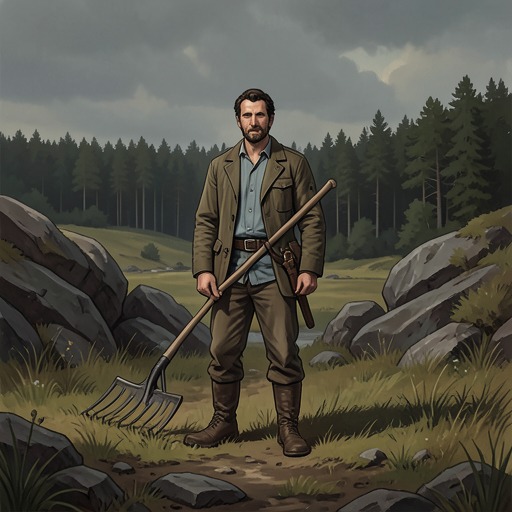
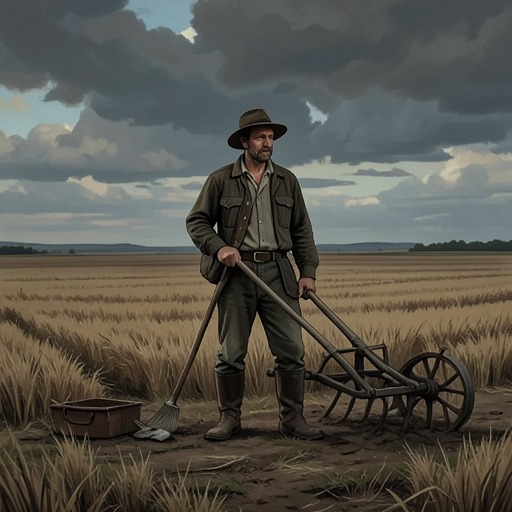
The early summer was the driest in 31 years. No rain fell during June; harsh winds came from the east and north, while the west wind associated with rain did not arrive. Grass in the meadows grew coarse, winter rye stopped at knee height, grazing ended, and the cows went dry. Haymaking began before June was over, because leaving the ripe grass standing risked losing what little strength it had. The crop was so scant that the rake barely caught the short, thin stalks.
Karl Oskar saw the season as one more turn in a pattern of work defeated by weather. The previous year had been wet: hay rotted in the swaths or washed away. Now the crop burned up under drought. As he raked, he blamed the Lord’s weather for making his labor futile; the meadow barn, which had been too small in good years, was not half full. His anger was not simply a complaint about discomfort. It arose from the widening gap between the work demanded of him and the food or income that work could produce.
The drought continued into the summer. Korpamoen’s well dried up, and the household had to carry water from an old spring in the forest. Cattle stood thirsty at the stile, while scorched fields and the yellowing birches made the failed season visible beyond the harvested meadow. Clouds appeared but brought no rain, and the few drops that fell did not relieve the drought.
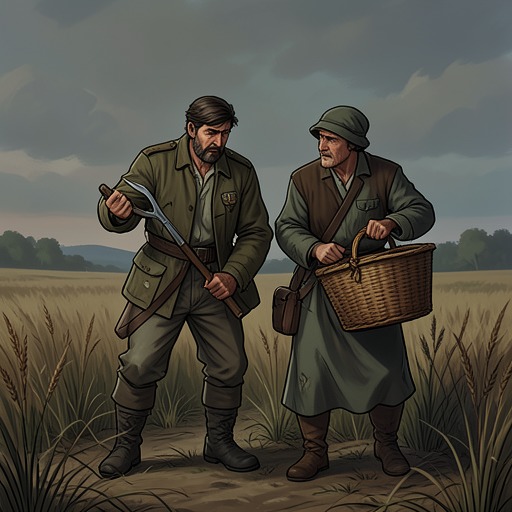
The rye harvest required the family to salvage what ordinary harvesting would lose. Because the ripe grains were ready to fall from the heads, Karl Oskar and Kristina spread a quilted bedcover beneath the scythe’s swath to catch them. Kristina gathered broken heads in her apron; by evening, the grain saved on the cover amounted to a tenth of a bushel, enough for a few loaves. Even with this care, the rye field yielded only a third of its usual crop. A small quantity rescued from the stubble could not answer the question of how the household would eat through winter.
Labor, Household Obligation, and Faith
The quilt gave the harvest a particular household history. Four years earlier it had been Kristina’s bridal cover; now it served as a tool for gathering grain from a failing field. Its practical use joined the couple’s marriage to their shared work and subsistence, while Kristina noticed that their daily conversation had narrowed to the tasks ahead and the repeated absence of rain. The object’s changed function makes the drought legible not only as crop loss but as pressure entering the rhythms of married life.
The failed seasons also tested the belief that work was sufficient to sustain a household. Nils invoked the biblical teaching that people must earn bread through the sweat of their brows, but Karl Oskar answered that work and sweat did not guarantee bread. After three years of effort, the couple had moved backward financially; now the drought threatened the produce on which their next year depended. The novel presents this not as a rejection of labor but as an increasingly painful recognition that labor remained subject to forces the farmer could not control.
Faith offered Kristina a way to interpret those forces, though it also heightened her concern. She believed the drought might be divine chastisement and read the Prayer Against Persistent Drought each evening, sometimes joined by Karl Oskar. She wanted him to seek absolution from the dean for his angry words against the weather before they took Communion together again. Karl Oskar did not heed her admonition. Their difference makes the drought a spiritual strain as well as an economic one: Kristina seeks reconciliation with religious authority, while Karl Oskar confronts the apparent contradiction between scripture’s promise of bread through labor and the failure of his fields.
Consequences and Migration
When Karl Oskar sowed winter rye in the autumn, the earth was hard and dry beneath the surface. He had previously sown four bushels of barley and harvested only four bushels in return; the prospect of planting seed into a field that did not multiply it made sowing seem almost wasteful. He had lost confidence in the soil and wondered whether the seed would be better used as food. Rumors that rain had fallen elsewhere only sharpened the sense that the local ground was accursed.
The drought belongs to a longer accumulation of setbacks rather than standing alone as the sole cause of migration. Four years into their life at Korpamoen, Karl Oskar and Kristina were several hundred riksdaler poorer than when they began, and he feared that continued toil would leave them old and exhausted with little more than the reserved room and meager provisions owed to his parents. He also worried about their children: one might inherit the farm, while the others would face hired service or life as squatters. In his view, America offered fertile land where work might improve a family’s position, unlike the repeated struggle at home. The drought’s failed harvest made that contrast more immediate, turning the vulnerability of a single small farm into part of the couple’s larger decision to leave.
The crisis is therefore both material and interpretive. Dry weather diminishes hay, water, and grain; debts and customary obligations magnify the loss; and the uncertain harvest challenges the household’s confidence that endurance will be rewarded. The drought does not decide the family’s future by itself, but it gives concrete force to the question that will shape it: whether they should continue laboring on land that has yielded so little, or seek a place where their work might count for more.